
PT-141 stands out from most peptides for one big reason: it is actually FDA-approved for a specific use. Here is a clear look at how it works, what the science shows, and who should be careful.
Quick answer
PT-141, also called bremelanotide, is an approved medicine for low sexual desire in some premenopausal women, sold as Vyleesi. It works in the brain, not on blood flow, and it has real human trial data behind it.
What Is PT-141?
PT-141 is the research name for bremelanotide. It is a peptide that acts on the brain's melanocortin system, which plays a role in sexual desire and arousal.
This is very different from popular ED pills. Those work on blood flow in the body. PT-141 works higher up, in the brain, on the "desire" side of the equation. That is a key distinction.
How PT-141 Works
PT-141 activates certain receptors in the brain, mainly one called MC4R. Through that action, it can help spark sexual desire and arousal from the top down rather than by changing circulation. Scientists still do not fully map every step of the pathway, but the brain-based mechanism is well recognized. You can read a technical overview in this study on the melanocortin agonist behind PT-141 on PubMed.
What It Is Approved For
Bremelanotide is FDA-approved to treat acquired, generalized hypoactive sexual desire disorder (HSDD) in premenopausal women. In plain terms, that means a real drop in sexual desire that causes distress, in women who used to have a normal level of desire.
It is taken as a small injection under the skin before expected activity, with clear limits on how often it can be used. The full official details are in the FDA prescribing information for Vyleesi (bremelanotide).
What the Trials Showed
PT-141 has real human trial data behind it, which is rare for peptides in this space. Its large studies (known as the RECONNECT trials) found that more women on the medicine reported an increase in desire and a drop in distress compared with placebo.
The honest detail is that the benefit was modest. It helped a meaningful share of women, but it was not a dramatic fix for everyone. Setting fair expectations matters here. For a balanced medical summary, see this bremelanotide overview from the NIH LiverTox database.
Off-label use in men for erectile issues or low libido is also common in clinician-guided protocols, though that use is not FDA-approved.
Side Effects and Who Should Avoid It
The most common side effect by far is nausea, which is also the top reason people stop using it. Other common effects include flushing, headache, and reactions at the injection site.
An important safety note. PT-141 causes a short-term rise in blood pressure and a dip in heart rate after each dose. Because of this, it is not for people with uncontrolled high blood pressure or known heart disease, and it is not recommended for those at high heart risk. Long or repeated dosing can also cause darkening of the skin in some people.
Legal and Sport Status
The approved product, Vyleesi, is a legitimate prescription medicine. Be aware that "PT-141" sold by peptide vendors is not the same as the FDA-approved product and does not carry the same quality controls. PT-141 is not currently on the main anti-doping banned list, but athletes should confirm with their governing body.
A quick disclaimer: This article is educational and not medical advice. PT-141 is a prescription medicine with real cautions. Only use it under the care of a licensed provider who can confirm it is safe and right for you.
The Honest Takeaway
PT-141 is the rare peptide with a clear, approved use and real trial data. For the right person, a premenopausal woman with distressing low desire, it is a legitimate, doctor-guided option. Just keep expectations realistic, respect the heart and blood pressure cautions, and get it through a proper prescription rather than a gray-market vial.
Frequently asked questions
How we use PT-141
What it is
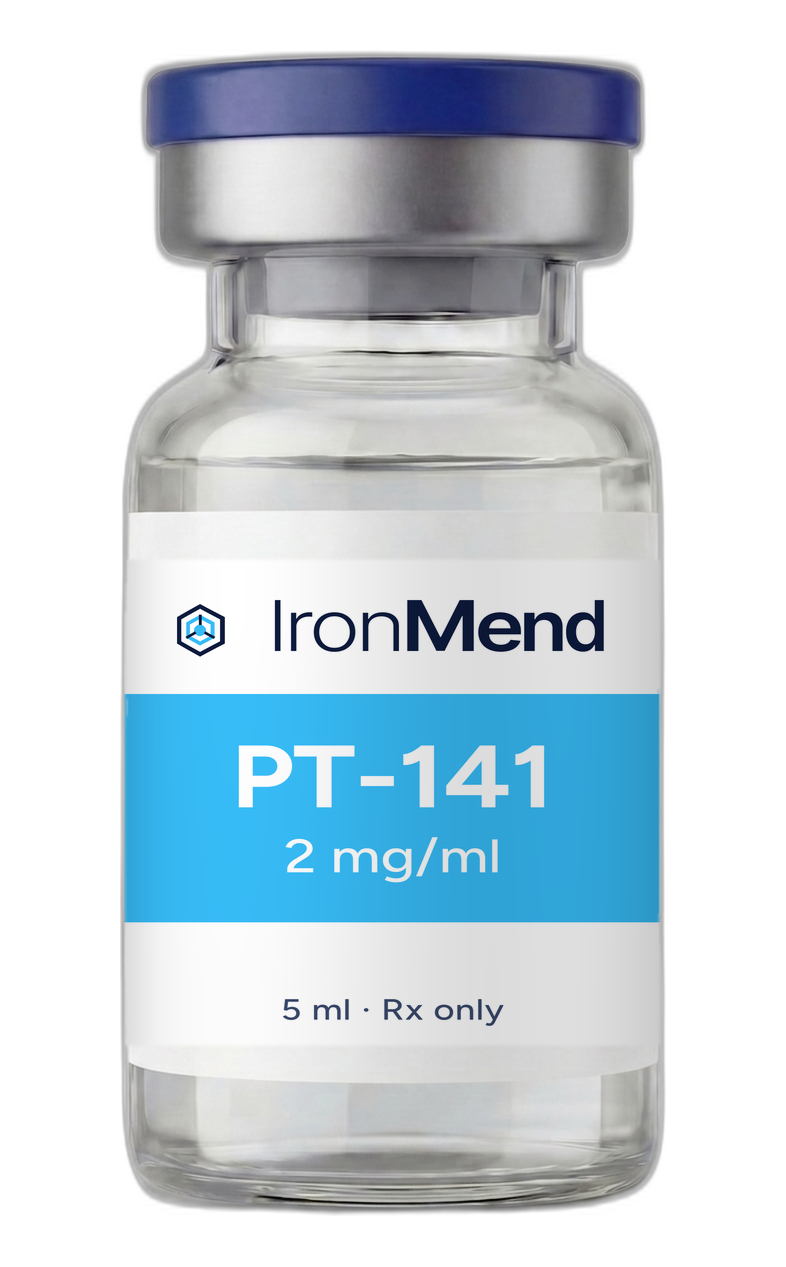
PT-141 (bremelanotide) is a synthetic analog of alpha-MSH that acts on melanocortin receptors in the central nervous system. Compounded as 2mg/ml (5ml), prescription only.
How it works
Unlike PDE5 inhibitors, which act on blood flow, PT-141 works upstream in the brain on pathways associated with sexual desire and arousal.
Relevance during recovery
Libido commonly dips during recovery from surgery, illness, or hormonal disruption. PT-141 is one option a provider may consider once the underlying causes have been reviewed.
What the evidence shows
Bremelanotide has been studied in randomized trials for hypoactive sexual desire disorder in premenopausal women, with an FDA-approved branded product in that indication. Compounded use here is separate from that approval.
Considerations
Nausea and flushing are the most commonly reported effects. Not appropriate with uncontrolled hypertension or known cardiovascular disease without clearance.