
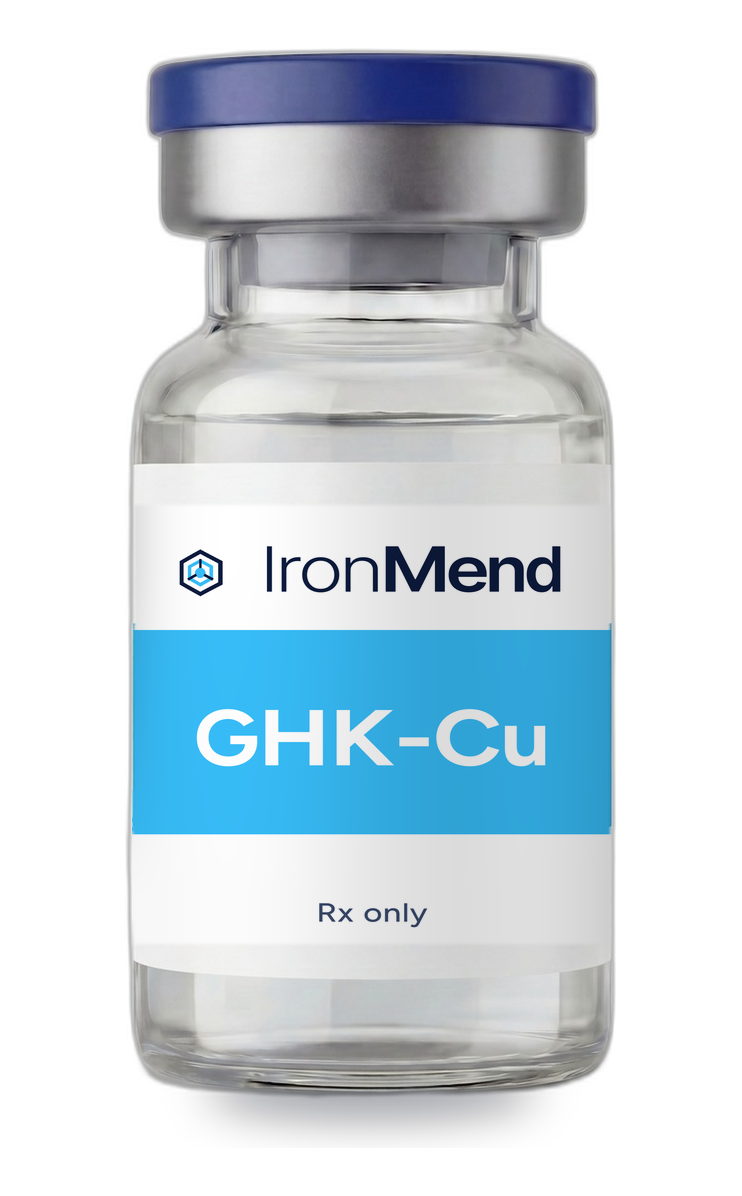
GHK-Cu is a favorite in skincare and one of the better-studied peptides for skin health. Here is a clear look at what it is, what it can do, and how to think about it safely.
Quick answer
GHK-Cu is a natural copper-carrying peptide that supports collagen, skin repair, and a younger look. Topical use has decades of research behind it, and injectable GHK-Cu has become a favorite in clinician-guided recovery and skin protocols.
What Is GHK-Cu?
GHK-Cu is a tiny peptide made of three amino acids (glycine, histidine, and lysine) joined with a copper atom. That is why it is called a copper tripeptide. It occurs naturally in the body and was first discovered in the 1970s.
Here is a detail that helps explain the interest: your natural levels drop as you age. Research shows the amount in blood plasma is much higher at age 20 than at age 60. That drop lines up with slower healing and aging skin, which is part of why scientists keep studying it. You can read the background in this peer-reviewed review of GHK-Cu and tissue repair on PubMed Central.
How GHK-Cu Works
GHK-Cu acts like a helper and a signal at the same time. Its studied effects include:
- Carrying copper into cells, which many repair enzymes need to do their job.
- Boosting collagen and elastin, the proteins that keep skin firm and springy.
- Supporting wound healing and helping skin cells travel and rebuild.
- Acting as an antioxidant, helping calm damage and inflammation.
It also switches many skin-related genes toward repair mode. For a deeper look at that gene activity, see this study on GHK peptide and skin regeneration pathways on PubMed Central.
What the Research Shows
GHK-Cu stands out because its skin benefits have real support, not just theory. In cosmetic and topical use, studies point to smoother skin, better firmness, fewer fine lines, and improved repair after sun damage. This is why you see it in serums and creams so often.
Topical GHK-Cu has decades of evidence behind it, and injectable GHK-Cu is where clinicians are seeing exciting results for tissue quality, healing, and post-surgical skin recovery.
Is GHK-Cu Safe?
Topical GHK-Cu is well established and generally considered safe for most people, which is why it is common in skincare. Mild irritation is the usual worst case.
Injectable use simply requires the right setup: a licensed compounding pharmacy and a provider who tailors dosing and monitors your response.
Legal Status
GHK-Cu is not an FDA-approved drug, but its status splits by how it is used. Topical GHK-Cu is widely and legally used in cosmetics and in some compounded skin treatments. Injectable GHK-Cu is treated with more caution and currently cannot be freely compounded for injection while it is under review. If you compete in sport, check with your governing body before using any injectable peptide.
A quick disclaimer: This article is educational and not medical advice. For skincare or any injectable use, talk with a licensed dermatologist or healthcare provider, especially if you have sensitive skin or a health condition.
The Honest Takeaway
GHK-Cu is one of the more reassuring names on this list. For skin, its topical benefits are backed by real research, and it has a long, safe history in cosmetics. On the skin it is deeply studied, and injected it is a fast-growing part of clinician-guided protocols. Either way, you are on solid ground.
Frequently asked questions
How we use GHK-Cu
What it is
GHK-Cu is a copper peptide complex (glycyl-L-histidyl-L-lysine bound to copper) found naturally in human plasma, with levels declining with age. Compounded to USP standards, prescription only.
How it works
GHK-Cu influences genes involved in tissue remodeling, stimulates collagen and glycosaminoglycan production, and supports antioxidant defenses in the dermis and connective tissue.
Post-surgery relevance
Most often discussed for incision appearance, scar remodeling, and skin quality during the weeks after a procedure, as well as broader connective-tissue support.
What the evidence shows
There is meaningful in-vitro and dermatologic literature on GHK-Cu and skin remodeling. Evidence specific to surgical recovery is limited; benefits are supportive and vary by individual.
Considerations
Copper status matters, so a provider reviews labs and your supplement list before prescribing. Not appropriate in Wilson's disease or copper overload.